Key Takeaways
- Plasma has traditionally outperformed fiber laser on carbon steel thicker than about 5/8″ to 1″, while fiber laser leads on speed, tolerance, and edge quality below that range.
- Fiber lasers at 20 kW and above now cut 3/4″ to 1-1/4″ carbon steel cleanly, which narrows the gap but raises the purchase price.
- A fiber laser typically costs two to five times as much to buy as a comparable plasma system.
- Plasma tolerates rust, mill scale, and paint far better than fiber laser, which matters most in heavy fabrication and structural work.
- High-mix precision work points to a fiber laser, heavy or imperfect plate on a tighter budget points to HD plasma, and many shops are best served by both.
Jump Ahead
Most shops comparing plasma vs laser cutting start with the same rule of thumb: laser for thin sheet, plasma for thick plate. That rule still points in the right direction, but it was set before 20 kW and 30 kW fiber sources became common, and following it without checking the numbers can put a shop on the wrong machine. Buy a CNC laser cutting machine for a job mix that is mostly 1″ plate covered in mill scale, and you pay a large premium for speed the work can’t use. Buy a plasma table for high-mix precision parts in 10-gauge to 1/4″ sheet, and the savings go straight into grinding, reaming, and rework.
Cutting Systems Inc. offers fiber laser cutting machines and manufactures high-definition plasma and oxyfuel cutting machines, so we don’t need either technology to win this comparison. This guide treats the choice as an engineering decision: where the traditional crossover point sits, what high-power fiber lasers have changed, how the two processes compare on cost and cut quality, and how to match a machine to the parts your shop actually cuts.
What Is Fiber Laser Cutting?
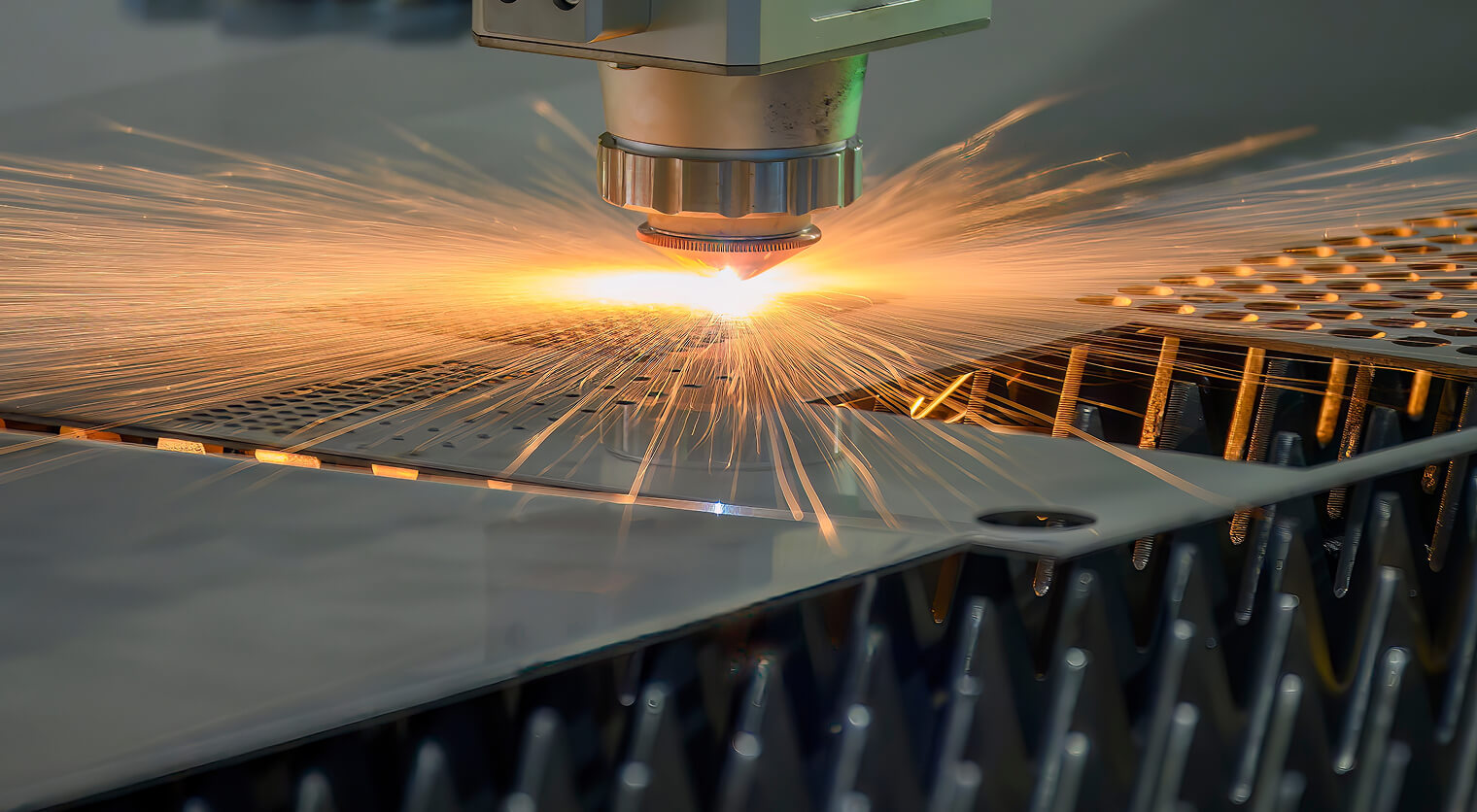
A fiber laser generates light inside a doped optical fiber, amplifies it, and delivers it through a cutting head that focuses the beam to a very small spot. The focused beam melts the metal, and an assist gas clears the molten material from the kerf. Oxygen is the usual assist gas for thicker carbon steel because the reaction adds heat to the cut. Nitrogen or compressed air is used when the shop needs oxide-free edges on stainless steel, aluminum, and thinner carbon steel.
Because the beam is so narrow, a fiber laser cutting system produces a kerf of roughly 0.006″ to 0.016″ (0.15 to 0.4 mm) and holds part accuracy better than 0.002″ (0.05 mm), according to Esprit Automation’s laser vs. plasma comparison. That precision, plus a short consumables list made up mostly of nozzles and protective windows, is why fiber lasers dominate thin sheet, small holes, and intricate profiles.
What Is Plasma Cutting?
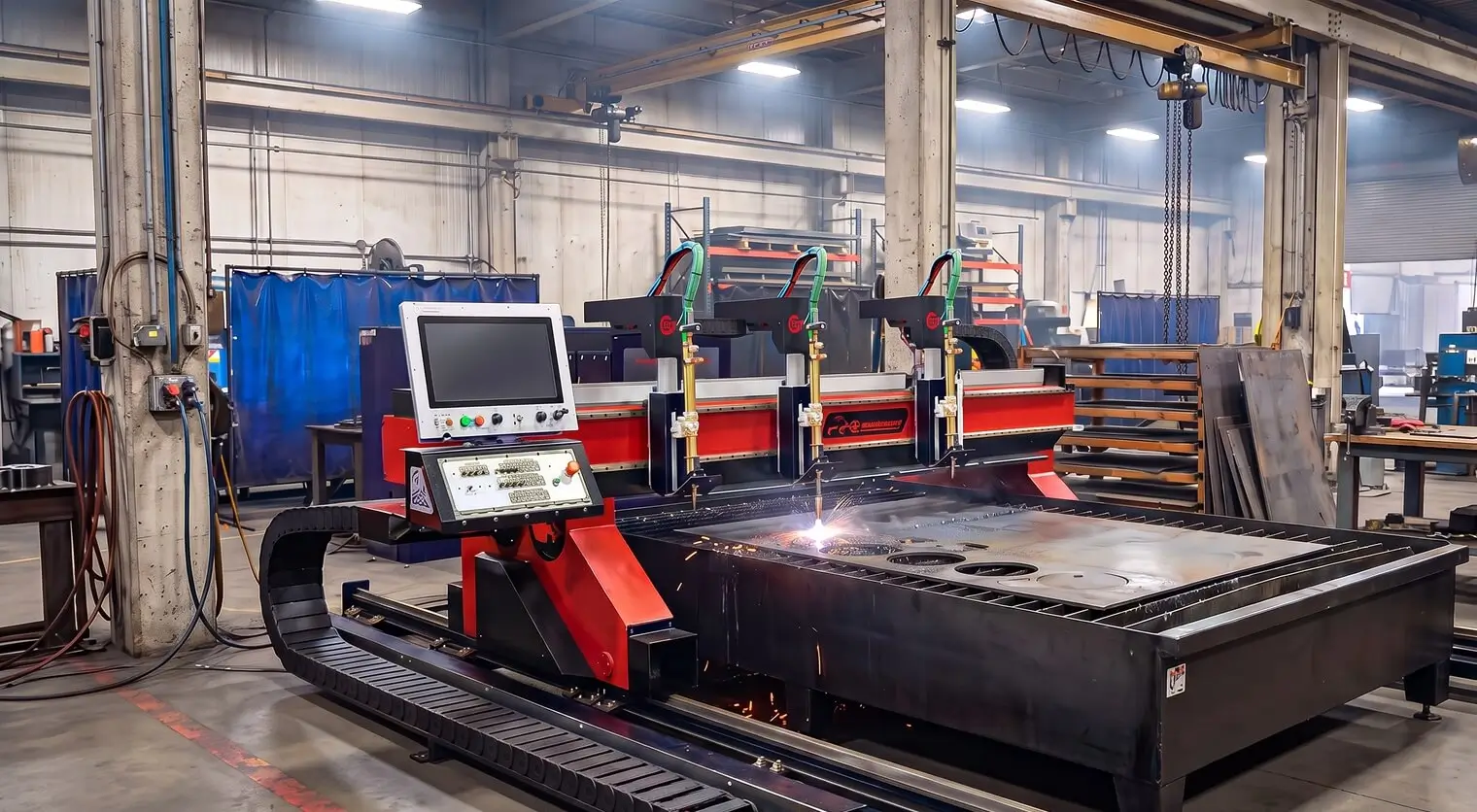
A plasma torch forces compressed gas through a constricted nozzle and an electric arc, which turns the gas into plasma hot enough to melt electrically conductive metal and blow it out of the cut. High-definition (HD) plasma tightens that arc with refined nozzle designs, precise gas control, and automatic torch height control, which produces squarer edges and cleaner holes than conventional plasma. For a full breakdown of torches, power supplies, and nesting software, see our complete guide to CNC plasma cutting.
HD plasma cuts thick plate quickly and handles bevels, bolt holes, and long structural parts on large-format gantries. The tradeoff is a wider kerf, typically 0.02″ to 0.087″ (0.5 to 2.2 mm), and part tolerances in the range of ±0.02″ (±0.5 mm), per Esprit. Hypertherm puts the practical tolerance gap between the two processes closer to 0.01″ (0.25 mm) in its plasma vs. laser analysis, which is tighter than many buyers assume.
The Classic Crossover Point
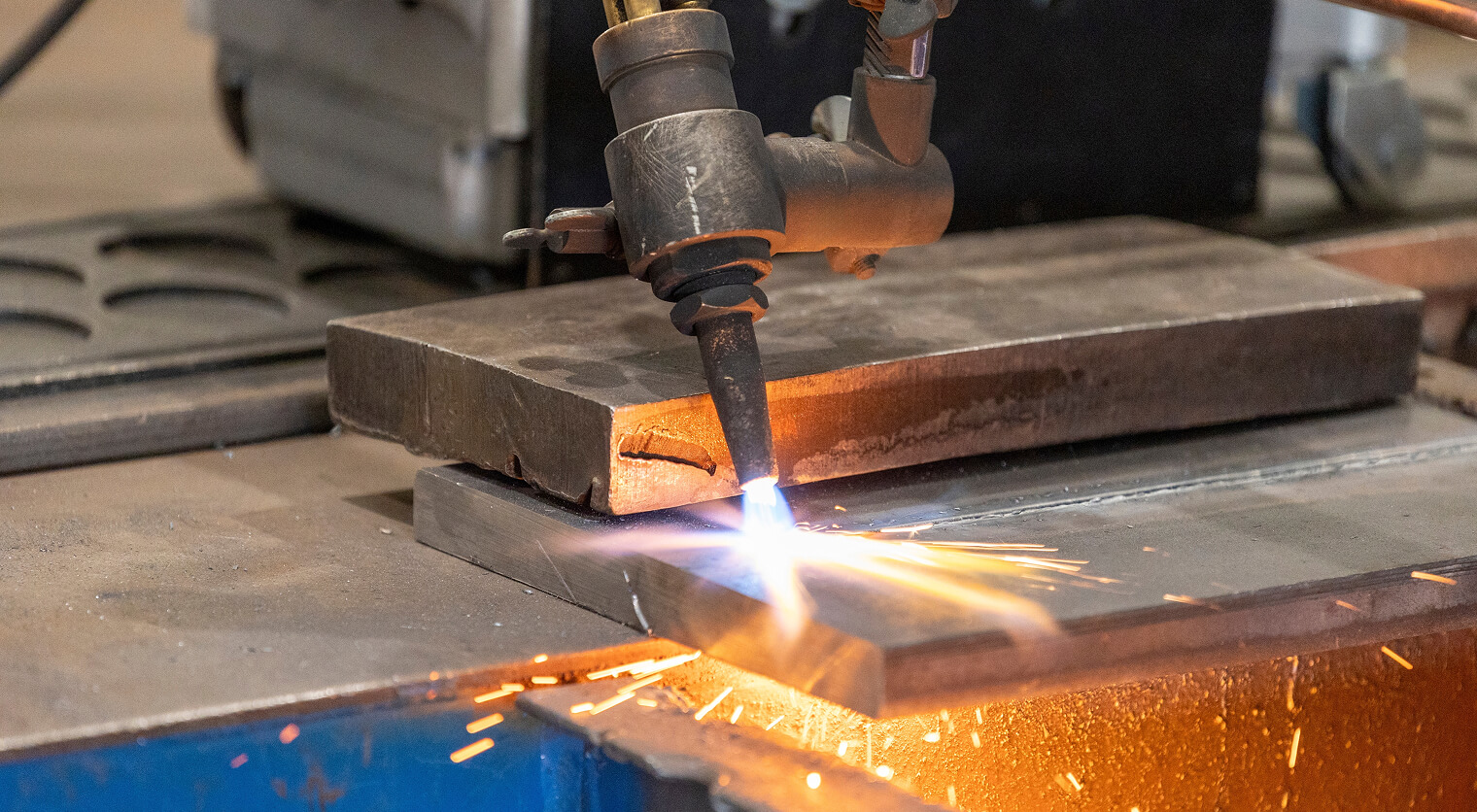
For years, the dividing line in the fiber laser vs. high-definition plasma decision has sat somewhere between 5/8″ and 1″ on carbon steel. Hypertherm states that plasma is especially advantageous on metal thicker than 16 mm (5/8″) and that it cuts faster than fiber laser above that thickness. The American Welding Society’s Welding Digest reports that fiber laser edges get rougher above about 1/2″ and that plasma operating costs drop below laser once thickness reaches 1/2″ to 1″.
Below the crossover, fiber laser wins on speed, edge quality, and usually cost per part. Above it, plasma cuts faster, costs less per foot, and delivers edge quality that is good enough for most welded fabrication. Our overview of plasma cutting vs. other metal cutting methods covers where waterjet and oxyfuel fit around both. Above roughly 2″ on carbon steel, oxyfuel usually becomes the more economical process, which we explain in our guide to heavy plate fabrication with oxyfuel and HD plasma.
What High-Power Fiber Lasers Changed
The crossover is moving. Fiber sources at 20 kW and above are now common in production shops, and CSI’s fiber laser plate cutting machines range from compact 1.5 kW units up to 60 kW large-format gantries. At those power levels, thicker carbon steel is no longer out of reach for a laser.
Testing published in Laser Focus World by IPG Photonics engineers showed dross-free air cutting of 20 mm (about 3/4″) carbon steel at 20 kW, 30 mm (about 1-3/16″) at 30 kW, and 40 mm (about 1-9/16″) at 40 kW. The same authors reported that a 20 kW fiber laser cut carbon steel more than twice as fast as plasma on material up to 15 mm thick. IPG’s own laser vs. plasma guide goes further and claims that lasers of 40 kW and above cut steel from 10 mm to 40 mm faster than plasma.
Two cautions apply. First, those figures come from a fiber laser manufacturer, while Hypertherm, a plasma manufacturer, frames its comparison as a rule of thumb for lasers up to 20 kW. Read every vendor number with that in mind, including ours. Second, power has a price. Each jump in laser wattage raises the machine cost, the electrical service, and the chiller load. Plasma’s advantage on 1″ and thicker plate comes from low capital cost and forgiving material handling, not from cut speed alone.
The practical result: a 20 kW to 30 kW laser can now take on 3/4″ to 1-1/4″ plate that used to belong to plasma. Above 1″, plasma usually still wins on cost per cut, on tolerance of dirty plate, and on total cost of ownership. The real question is whether your part mix will keep a high-power laser busy enough to justify it.
Plasma vs Laser Cutting: Side-by-Side Comparison
| Factor | Fiber Laser | High-Definition Plasma |
|---|---|---|
| Best thickness range (carbon steel) | Gauge sheet to about 1"; 20 kW+ systems extend clean cuts to about 1-1/4" | About 1/4" to 2" for production cutting; CSI's Raptor cuts up to 6.25" |
| Speed crossover | Faster below about 5/8" | Faster above about 5/8" to 1" |
| Kerf width | 0.006" to 0.016" | 0.02" to 0.087" |
| Typical part accuracy | Better than ±0.002" | About ±0.01" to ±0.02" |
| Cut angularity (ISO 9013) | Range 1 to 2 | Range 2 to 4 |
| Cost to purchase | Two to five times a comparable plasma system | Lower upfront investment |
| Operating cost | Lower on thin material | Lower per foot above about 1/2" to 1" |
| Material condition tolerance | Prefers clean, consistent plate; rust, scale, and paint reduce cut quality | Cuts rusty, painted, and mill-scale plate reliably |
| Materials | Carbon steel, stainless, aluminum, brass, copper | Any electrically conductive metal |
| Bevel cutting | Possible with specialized bevel heads | Mature; true bevels in a single pass |
The table makes one point clear: neither process wins every row. Fiber laser owns precision and thin-material speed. HD plasma owns heavy plate, imperfect material, and weld prep. If your parts need beveled edges for full-penetration welds, our guide to CNC plasma bevel cutting shows how a single-pass bevel removes a manual grinding step.
Cost to Buy vs. Cost to Run
Purchase price separates the two technologies more than any spec sheet does. Hypertherm and AWS both put fiber laser purchase cost at two to five times that of a comparable plasma machine. Esprit estimates payback at roughly two to three years for a plasma machine and about five years for a fiber laser, and AWS notes that plasma systems can often recover their capital cost in two years or less.
Operating cost flips with thickness. On thin material, a fiber laser cuts so quickly that its cost per part is usually lower. On thicker plate, plasma’s speed and lower gas consumption bring its cost per foot down. Fiber lasers have fewer consumables, but AWS reports that their maintenance costs run higher.
Utilization decides the math. A laser running two shifts of high-volume sheet work can recover its premium quickly; IPG’s own example claims 20 months at high utilization. A laser running one shift on mixed thick plate may never get there, a point Hypertherm makes directly. For a wider look at acquisition, installation, software, and support costs, see our CNC machine cost breakdown.
Material Condition and Mixed-Material Shops
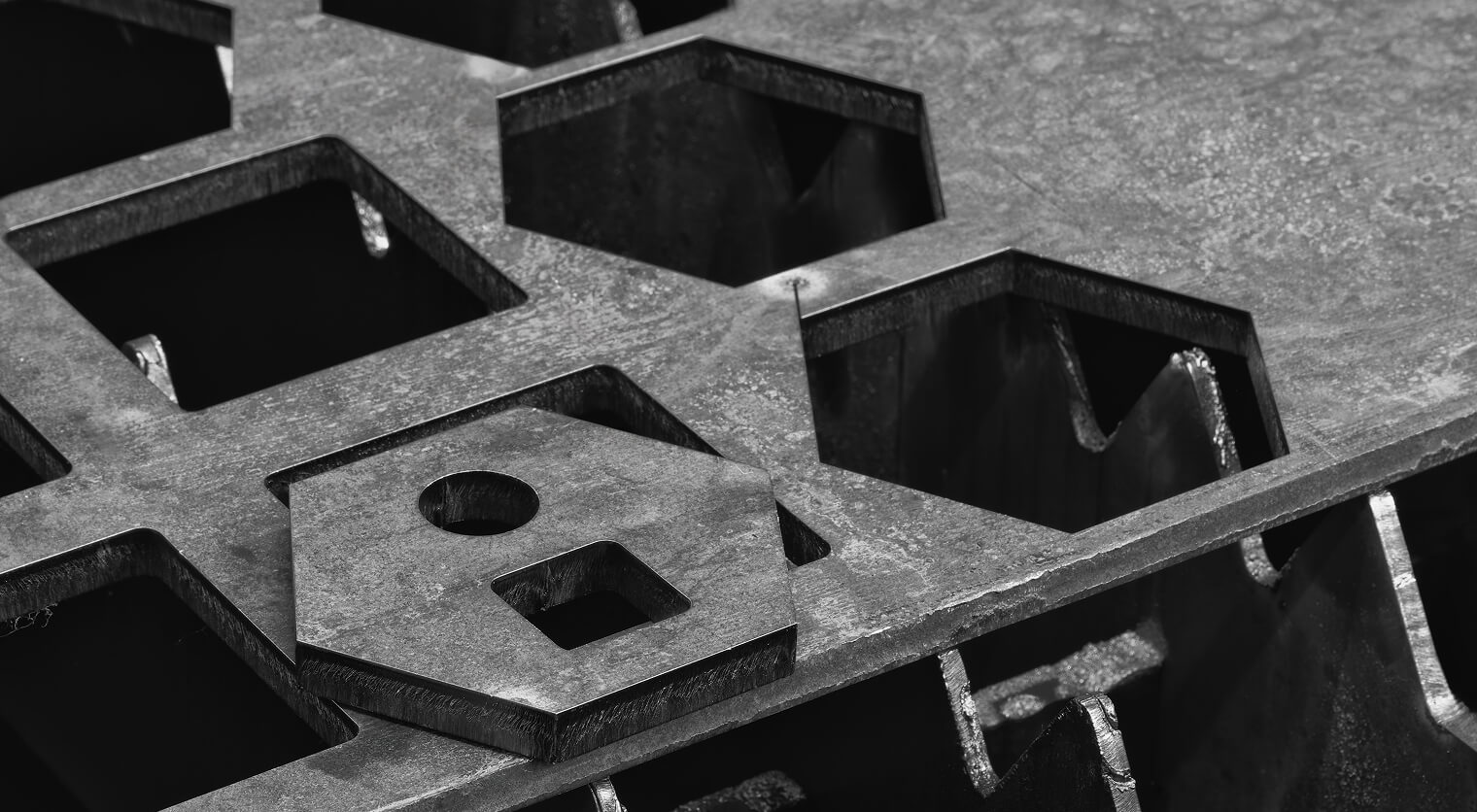
Real-world plate is rarely clean. Structural steel, heavy equipment, and agricultural fabricators routinely cut plate with mill scale, rust from outdoor storage, or shop primer. Plasma handles that condition well. Hypertherm reports that plasma reliably cuts oxidized, painted, or variable-thickness metal, while fiber laser users often have to specify plate grade, store material indoors, or add a cleaning pass before cutting.
Reflective metals are the other factor. A fiber laser can cut copper and brass, but back-reflected light during piercing has historically put the laser source at risk. Modern sources add isolation hardware to manage that reflection. Plasma cuts any conductive metal regardless of reflectivity, though its edge quality on nonferrous metals is lower than a laser’s.
How to Decide: Match the Machine to Your Work
Start with three questions. What thickness makes up most of your cutting hours? What condition does your plate arrive in? And how tightly do your parts need to fit when they reach the welder or the assembly line? The answers usually sort shops into one of three groups.
Choose High-Definition Plasma When
- Most of your cutting hours are on plate thicker than 5/8″ to 1″.
- Your plate arrives with mill scale, rust, or paint, and pre-cleaning isn’t practical.
- Your budget or expected utilization can’t support a high-power laser.
- You need weld-ready bevels on thick parts, which the Cobra bevel cutting machine handles at up to ±52° with a Hypertherm XPR system.
- You cut long or wide plate. The Raptor CNC plasma cutting machine runs Hypertherm XPR or HPR systems from 200 to 800 amps, with cutting widths from 6′ to 30′ and lengths from 10′ to 250′.
For these shops, an industrial laser cutter pays for itself through throughput and the secondary operations it eliminates. CSI’s plate series run from compact cells to ultra-large-format gantries, so a CNC laser cutting machine can be sized to the sheets you actually buy.
Choose a Fiber Laser When
- Most of your cutting hours are on sheet and plate under 1/2″.
- Your work is high-mix precision parts with small holes, tight slots, and fine features.
- You cut a lot of stainless steel or aluminum and want clean, oxide-free edges.
- You can keep the machine busy, ideally with automated material handling feeding sheets around the clock.
- Your part mix includes round, square, or structural profiles that fit our tube laser cutting machines.
Choose Both When
Your part mix runs from gauge sheet to heavy plate. Many fabricators run a fiber laser for sheet work and an HD plasma table for plate, and route each job to the machine that cuts it cheapest. CSI offers every process covered in this guide and can help you work out which one fits your application, though a mixed part range often takes more than one machine. Shops that only need plasma and oxyfuel on one platform can look at the Kodiak plasma and oxyfuel cutting machine, which cuts plasma up to 6.25″ and oxyfuel up to 24″.
Get a Recommendation Built Around Your Parts
Most companies that sell one technology will tell you it’s the right answer. Because CSI manufactures plasma and oxyfuel machines and offers fiber laser systems, our recommendation starts with your parts instead of our product list. Bring us your thickness distribution, material types, plate condition, tolerance requirements, and expected cutting hours, and we’ll show you whether a fiber laser, an HD plasma table, or a custom-engineered cutting system is the best fit for your shop. Contact our team to start the conversation about plasma vs laser cutting for your operation.
Frequently Asked Questions
Why does plasma cut rusty, painted, or mill-scale steel more reliably than fiber laser without pre-cleaning?
A plasma arc transfers directly to the conductive base metal and carries enough energy and gas flow to blow through surface oxides and coatings. A fiber laser depends on consistent absorption of the beam at the material surface, so scale, rust, and paint can cause unstable piercing, uneven edges, and extra dross. Hypertherm notes that laser users often need to specify plate grade, store plate indoors, or run a cleaning pass, while plasma cuts oxidized and painted plate as it arrives.
Can a fiber laser damage its optics cutting reflective metals like copper or brass, and does that mean plasma is the safer choice for mixed-material shops?
Back reflection during piercing is the main risk, and it has damaged older fiber laser sources. Most current fiber lasers include back-reflection protection, so cutting copper and brass is routine when the machine is set up and rated for it. Confirm the source’s reflective-metal rating before you buy. Plasma carries no reflection risk and cuts any conductive metal, so it is a dependable choice for shops cutting thick nonferrous parts where edge finish is less critical.
Is the payback period for a fiber laser actually shorter than a plasma table if utilization is low?
Usually not. A fiber laser costs two to five times as much as a comparable plasma system, and it recovers that premium through speed on thin material and fewer secondary operations, which only add up when the machine runs many hours. Esprit estimates payback at about two to three years for plasma and about five years for fiber laser. At low utilization or with mostly thick plate, a plasma table almost always pays back faster than a CNC laser cutting machine.